TL;DR: In 2026, family can host (the Emily Post Institute now says anyone able to host can), the shower traditionally happens 4–6 weeks before the due date, the guest list is the parents' call, co-ed and virtual attendance are normal, guests spend roughly $30–100 on a gift, and thank-you notes go out within 2–3 weeks. The one rule that hasn't moved: the parents-to-be are the focus, not the host.
Baby shower etiquette in 2026 is different from the rules your mom followed. Co-ed showers are common, virtual attendance is acceptable, registry culture has shifted, and gift expectations have adjusted for the realities of modern baby costs. This guide covers the current etiquette rules for hosts, guests, and parents-to-be — based on widely accepted modern etiquette guidance and what's actually happening at real showers in 2026.
One overarching principle: baby shower etiquette in 2026 is more relaxed than it was 20 years ago, but the fundamentals are unchanged. The shower exists to celebrate the parents-to-be, not to check off boxes. Every specific rule below exists to make that celebration easier, not to create stress.
Who should host the baby shower?
Historically, etiquette said family members (especially the immediate family of the mom-to-be) should NOT host the shower — it was considered "asking for gifts." That rule has relaxed. The Emily Post Institute now says a shower can be hosted by anyone who is able to host, and that immediate family is sometimes the only sensible option.
Current guidance: anyone close to the parents-to-be can host. The most common choices:
- Close friend (most common): A best friend or maid of honor from the wedding typically hosts.
- Sister or sister-in-law: Common and now fully acceptable.
- Mother or mother-in-law: Still common, increasingly accepted.
- Multiple co-hosts: Also fine and often splits the work sensibly.
When should the shower happen?
The Emily Post Institute says showers are usually given four to six weeks before the due date, which lands around 34–36 weeks. Many planners now aim a little earlier, at 28–32 weeks, for extra cushion. The reasoning: late enough that pregnancy is visible and the parents know the baby's gender (if they're sharing), but early enough that a premature delivery doesn't cancel the shower. For picking the exact week, see our guide to when to have a baby shower.
Exceptions to the usual timing:
- High-risk pregnancies: Earlier is better. Some hosts throw the shower at 20-24 weeks.
- Second-time parents: Often held after the baby is born (called a "sprinkle" or "sip-and-see").
- Adoption: Timing is flexible. Many hosts wait until after the match is final or until the adoption is close to completion to avoid uncertainty.
Who should be invited?
The guest list is entirely the parents' call. Host responsibility: ask the mom-to-be and dad-to-be who they want invited, then compile that list. Etiquette rules that used to govern this (only invite women, don't invite distant friends) are obsolete.
Modern guidance:
- Co-ed showers are normal. If the parents want a co-ed shower, do it.
- Don't invite people who aren't invited to the birth announcement. If someone will get a baby announcement, they're fair game for the shower invite list. If they won't, skip them.
- Virtual attendance is normal. Invite far-away family to attend virtually.
- Multiple showers are OK. If the parents have multiple friend groups that don't overlap (work friends, family, college friends), throwing 2-3 smaller showers is fine. Just don't invite the same person to multiple showers.
Gift etiquette (guest perspective)
What to spend as a guest, and what's appropriate:
Typical gift spend: $50-100 for close friends/family, $30-60 for coworkers or distant friends. Close family often gives more, sometimes a big-ticket registry item, but no other guest is expected to match that.
Registry is the source of truth. Always buy from the registry first. The parents-to-be created that list specifically because they want those items. Deviating from the registry is only appropriate if you're a close family member giving a sentimental handmade gift (a blanket, a baby book with a personal inscription) — otherwise, stick to the registry.
Group gifting is encouraged. For expensive items (stroller, car seat, crib), it's standard and appreciated for multiple guests to group-fund. Most major registries, Babylist and Target included, support group gifting natively.
Wrap or don't wrap? In-person shower — wrap (or use a gift bag). Virtual shower — ship unwrapped is fine if it's coming via registry. Nobody expects wrapped gifts at virtual showers.
Cards are optional but thoughtful. A short card with your name and a brief message is enough. Don't stress about writing a heartfelt note unless you're family.
💝If you're the one shopping rather than receiving, the spending bands above map onto a shortlist of gifts that stay inside them.See mom-to-be gift picks by budget →Gift etiquette (parent perspective)
What the parents-to-be should do about gifts:
Register for the registry. Create a baby registry at Target, Babylist, or Amazon. Include items at multiple price points ($20-30 for budget-conscious guests, $50-100 for most, $150-300 for close family, and a few "big ticket" items over $500 for group gifts).
Include about 2x more items than guests. If you're having 30 guests, register for 60+ items. This gives guests real choice and avoids awkward "already purchased" situations.
Thank-you notes are still expected. Within 2-3 weeks after the shower, send a handwritten (or at minimum personalized email) thank-you to every gift giver. This rule has NOT relaxed. Thank-you notes remain a genuine etiquette requirement.
Thank-you note template: "Dear [Name], Thank you so much for [specific gift]. [Something specific about how you'll use it or why it matters]. [Personal line about them]. Love, [Names]." Keep it short — three sentences is enough.
The reason thank-you notes slip past the 2–3 week window is almost never the writing — it is hand-addressing 30 envelopes at 11pm. Printed return-address labels take that step out entirely:
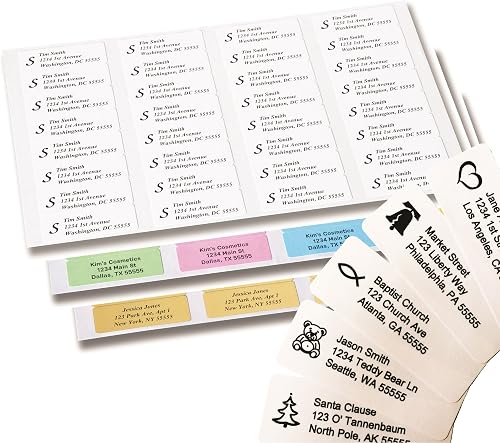
Personalized Return Address Labels (roll of 500, white)
A roll of 500 personalized return-address labels. One order covers the shower thank-yous, the birth announcements and the first-birthday invitations, which is the honest reason to buy 500 rather than 50.
~$11.95· approx · check Amazon
Buy on Amazon →Party etiquette for hosts
Host responsibilities at the shower itself:
Welcome every guest personally. Greet everyone by name as they arrive. This sounds obvious but at busy showers, hosts sometimes get distracted and miss people.
Don't make the shower about yourself. The host is the MC, not the star. The parents-to-be are the focus. Keep your own stories and contributions short.
Feed your guests. Even if it's just light snacks, have something. "The mom-to-be wanted a light shower with no food" is a red flag — ask them to reconsider. Guests get hungry.
Keep it under 3 hours for in-person, 90 minutes for virtual. Longer showers drain energy without adding memories.
Plan for the introvert and the extrovert. Have activities that engage the enthusiastic guests (games) AND passive activities for the quieter ones (food, casual chat). See our guide on how many games to plan.
The two passive activities that reliably work are the ones a quiet guest can do alone in 30 seconds and still feel part of — a signing keepsake and a written-advice card. Both also solve the parents' side of gift etiquette, because they produce something to keep rather than another stack of cards to recycle:

Fonder Mols Wooden Onesie Baby Shower Guest Book🏆 Top Rated
A wooden onesie-shaped guest book with room for about 80 signatures. It sits on the food table all afternoon, so guests sign it whenever they drift past instead of being called up.
~$21.59· approx · check Amazon
Buy on Amazon →Buyers praise appearance, baby shower use, quality and assembly. Some flag durability.
Based on 113 user mentions

Wooden Keepsake Box + 50 Advice Cards🏆 Top Rated
A keepsake box with 50 advice-and-wishes cards. Quieter guests tend to write more than they would ever say out loud, and the box doubles as the place the cards actually survive in.
~$9.99· approx · check Amazon
Buy on Amazon →Party etiquette for guests
What's expected of you as a guest:
RSVP on time. Hosts need to know guest counts to plan food and seating. RSVP by the date on the invitation, even if it's a "no."
Bring a gift or send one via registry. Don't show up empty-handed unless you've already sent a gift via registry delivery (in which case mention it so the hosts know).
Participate in the games. Even if you hate games, at least pretend. Refusing to play feels rude and makes the host feel bad. Most need no baby knowledge anyway: the Price Is Right game is just guessing what baby gear costs.
Don't give unsolicited pregnancy advice. Save it unless the mom-to-be specifically asks. "You should do X" is well-meaning but often stressful.
Don't touch the pregnant person's belly without asking. Also still a rule. Ask first, even if you know them well.
Don't share pregnancy horror stories. Your difficult birth is not what the mom-to-be wants to hear at her shower.
Take a break — guess the price
1 / 2 public clues
Baby Phrase Emoji Pictionary
This shows the reveal mechanic with the public emoji sample. The Price Is Right: Baby Edition is a full-deck choice; it is not included in this demo.
👶🚿
Baby emoji followed by a shower emoji
These clues repeat in the same six-question demo. Full event lineups require a Show Pass.
Virtual shower etiquette
Virtual showers have their own unwritten rules:
- Turn on your camera. Audio-only feels rude on a celebratory video call.
- Dress like you're going somewhere (at least from the waist up).
- Stay in frame. Don't wander around while others are talking.
- Mute when not speaking if the host requests it.
- Don't multitask visibly (don't scroll your phone on camera).
- Stay for the full event unless you have a genuine conflict. Leaving halfway through a 90-minute virtual shower is noticeable.
For more virtual shower guidance, see our how to host a virtual baby shower guide.
One host-side courtesy that closes the gap between the room and the screen: mail a small favor to the remote guests so they have something to open at the same moment everyone else does.

COTOPHER Clear Favor Boxes (60pk, 2×2×2")🏆 Top Rated
Sixty clear 2-inch favor boxes. Small enough to mail flat-rate to the guests joining on video, and they hold the same sweets or candle the in-person guests take home.
~$16.99· approx · check Amazon
Buy on Amazon →Buyers praise quality, size, assembly and appearance.
Based on 172 user mentions
Things that have genuinely changed since 2020
Etiquette rules that used to apply but no longer do:
"Only women attend baby showers." Dead. Co-ed showers are standard now.
"Don't throw a shower for a second child." Partially dead. Sprinkles (smaller showers for second children) are now acceptable.
"Don't throw a shower before 30 weeks." Relaxed. A 20–28-week shower is a normal choice, especially for high-risk pregnancies.
"Family shouldn't host." Dead. Family hosting is standard.
"Games must be all-female activities." Dead. Modern games are gender-neutral by design.
Still matter in 2026
Rules that haven't changed:
- Parents-to-be are the focus, not the host
- Thank-you notes are mandatory within 2-3 weeks
- RSVP on time
- Don't touch the belly without asking
- Don't share unsolicited pregnancy horror stories
- Gifts should come from the registry (with rare exceptions)
Ready to play
BabyShowerShow has 20 interactive baby shower games designed to make your shower run smoothly regardless of etiquette questions. Browse all 20 games →
For related guides, see our baby shower planning checklist, virtual baby shower guide, and types of baby showers explained.
Frequently asked questions
Is it OK for family to host a baby shower in 2026?
Yes. The Emily Post Institute now says a shower can be hosted by anyone who is able to host, and notes that immediate family is sometimes the only sensible choice. The old rule about family not hosting no longer holds.
How much should I spend on a baby shower gift?
$50-100 for close friends and family, $30-60 for coworkers or distant friends. Always buy from the registry first. Group gifts for expensive items are encouraged.
When should a baby shower happen?
Four to six weeks before the due date is the traditional answer (Emily Post); 28–32 weeks gives more cushion. Exceptions: high-risk pregnancies (earlier), second-time parents (often after birth, called a "sprinkle"), adoptions (flexible timing).
Are co-ed baby showers common now?
Yes. Partners, brothers and male friends are ordinary guests now. If the parents want a co-ed shower, it's fully normal and accepted.
Do you need to send thank-you notes after a baby shower?
Yes — this rule has NOT relaxed. Handwritten thank-you notes within 2-3 weeks of the shower remain a genuine etiquette requirement.
Is it OK to have multiple baby showers?
Yes, if they're for different friend groups that don't overlap (work friends, family, college friends). Don't invite the same person to multiple showers for the same baby.
Is it rude to host a baby shower for your own baby?
Traditionally yes, modernly it's accepted but still unusual. Most parents still have a friend or family member host rather than hosting their own.
Is it rude to skip a baby shower?
No. Reply by the RSVP date and keep it simple. If you're close to the parents, send a registry gift or a card anyway.
My gift is shipping to their house. What do I bring to the shower?
A card. Mention in it that your gift came from the registry, so the parents can match the box to you when they write thank-you notes.
Do I need two gifts for a joint or double baby shower?
One for each family being celebrated is the kind default, even if you only know one of them. The second can be small, like a board book or a pack of diapers.
Can I bring my partner or kids?
Only if the invitation names them. If it's addressed to you alone, go alone, or ask the host first rather than arriving with a plus-one.
Is it OK to post photos from the shower?
Ask the parents first. Some haven't shared the pregnancy, the baby's sex or the name widely yet, so wait until they have posted or said it's fine.