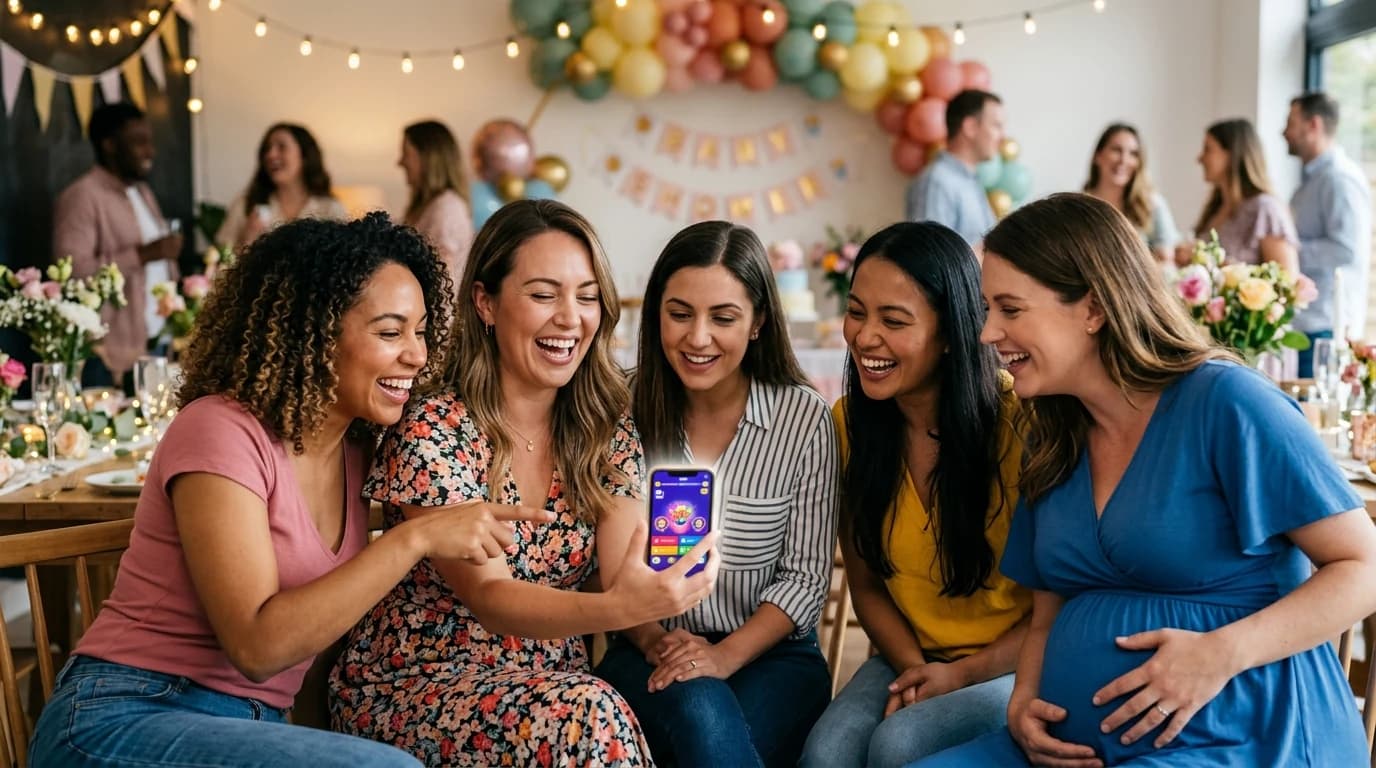
The best baby shower games that need no supplies are digital screen games — emoji pictionary, baby trivia, word scrambles, and "guess the price" rounds that you project on a TV or share on a laptop. No paper, no pens, no printing, no cleanup. Guests play along by shouting answers or using their phones, and the host just clicks through rounds. It's the fastest way to get a room laughing without spending an hour at the craft store the night before.
Setting up the whole shower? Jump straight to:
Why Are So Many Hosts Ditching Printable Games?
If you've ever hosted a baby shower, you know the drill: download a PDF, realize your printer is out of ink, drive to Staples, print 25 copies, buy pens, cut out game cards, then collect crumpled papers at the end of the party. Ask around and game prep is the step hosts complain about most — a lot of anxiety for something that's supposed to be fun.
The shift toward no-supply games has been building for years, and the reason is simple: modern hosts want the fun without the prep work. And guests — especially younger ones — actually prefer interactive screen games to filling out paper worksheets in silence.
🖨️Everything below runs from one browser tab on whatever screen is already in the room.See the no-printing games →What No-Supply Baby Shower Games Actually Work?
Here are the top games that require absolutely nothing except a screen (phone, tablet, laptop, or TV):
- Emoji Pictionary: Display a series of emojis on screen and have guests guess the baby-related phrase. For example, 👶🍼🌙 might be "midnight feeding." It's surprisingly competitive and gets the whole room shouting answers.
- Baby Trivia: Multiple-choice questions about pregnancy facts, baby milestones, and parenting stats. Did you know only about 5% of babies arrive on their exact due date? Questions like that spark genuine surprise and debate.
- Word Scramble Races: Scrambled baby-related words appear on screen and guests race to unscramble them. Fast-paced and works for any group size.
- Guess the Baby Price: Show photos of baby products and have guests guess the retail price. Baby gear costs more than anyone expects — the reveals genuinely shock people, which is exactly what makes the game fun.
- Name That Tune (Lullaby Edition): Play short clips of lullabies or baby-themed songs and have guests identify them. Zero supplies needed — just a speaker.
Platforms like BabyShowerShow.com bundle these games into ready-to-play packages where the host simply shares a screen and clicks through rounds. No accounts, no downloads, no app installations for guests.
How Do Screen-Based Games Compare to Paper Games?
The biggest difference is engagement. Paper games are inherently solo activities — everyone looks down at their own sheet and works quietly. Screen games are group experiences where everyone looks at the same thing, reacts together, and competes in real time — the difference in the room's energy is immediate.
There's also the time factor. A typical paper game requires 3-5 minutes of explanation, 10-15 minutes of play, and 5-10 minutes of collecting and scoring. A screen-based round takes 30 seconds to explain ("look at the screen, shout out your answer") and 2-3 minutes per round. You can fit five different games into the time it takes to play one paper game. For hosts working within a tight schedule — especially office baby showers with limited time — that efficiency matters enormously.
Do No-Supply Games Work for Every Group Size?
Yes, and that's one of their biggest advantages. Paper games require you to estimate headcount and print enough copies (plus extras, because someone always needs another one). Screen games scale infinitely. Whether you have 8 guests or 80, you project the same screen and everyone plays along.
For large group showers, no-supply games are practically essential. Imagine printing, distributing, and collecting 50 game sheets — it's a logistical headache. With a screen game, the host clicks "next round" and the whole room plays simultaneously — which is why big showers in particular have moved to digital games out of practical necessity.
What About Guests Who Aren't "Tech-Savvy"?
This is the most common objection, and it's usually unfounded. No-supply screen games don't require guests to use technology at all. The host controls the screen. Guests just look at it and shout out answers, raise their hands, or hold up fingers to vote. There's no app to download, no QR code to scan, no login to create. If a guest can watch television, they can play these games.
That said, some platforms do offer optional phone-based participation where guests can buzz in answers on their devices. This adds a competitive scoring element that younger groups love, but it's never required. The beauty of a well-designed no-supply game is that participation is as simple as paying attention and speaking up.
Can You Mix No-Supply Games With Other Activities?
Absolutely — and you should. The best baby showers blend different energy levels throughout the event. Start with a low-key game like trivia while guests are still arriving and eating. Move to something high-energy like emoji pictionary during the peak of the party. Then wind down with a sentimental activity like "advice for the parents" (which, yes, does require cards — but it's worth the one exception).
A platform like BabyShowerShow.com lets you queue up multiple game types and run them back-to-back, creating a seamless flow. No shuffling papers between rounds, no lost pencils, no "wait, which game are we on now?" moments. Plan on 3-4 games for a two-hour shower — with no-supply digital games, that's easily achievable without any advance preparation.
Related Reading
- The Best Baby Shower Games for 2026 (Zero Prep Required)
- Printable vs. Digital Baby Shower Games: Which Should You Choose?
- Virtual Baby Shower Games That Actually Work
Do no-supply baby shower games cost money?
Some platforms offer free rounds with optional paid upgrades for full game packs. Compared to the cost of printing (ink, paper, a trip to the store), digital games are often cheaper — and always less hassle. Many hosts find that a one-time digital game purchase costs less than a single ink cartridge.
Can I play no-supply games without Wi-Fi?
Most screen-based games require an internet connection to load, but once loaded, some can run offline. If your venue has spotty Wi-Fi, consider using your phone's hotspot or loading the games in advance. Always do a test run at the venue if you're concerned about connectivity.
What's the best screen size for baby shower games?
For groups of 10 or fewer, a laptop screen works fine. For 10-25 guests, connect to a TV via HDMI or use screen mirroring (AirPlay, Chromecast). For 25+ guests, a projector is ideal. The key is that everyone in the room can see the screen without squinting — if they can read the text from the back of the room, you're set.
Are no-supply games boring compared to hands-on activities?
Not at all — in fact, most hosts report the opposite. The group dynamic of everyone looking at the same screen and competing together creates more energy than individual paper worksheets. The key is choosing games with fast pacing and visual appeal, like emoji rounds and timed challenges, rather than slow-paced digital quizzes.